High Intensity Training (HIT) can be an effective way for men and wmen to improve strength, fitness, and body composition without spending hours in the gym. But is it right for you? For many people, the answer is yes.
A properly designed High Intensity Training program can help you build strength and muscle, improve body composition, support cardiovascular health, and become more physically capable. One of the biggest advantages is efficiency: HIT workouts are generally brief, focused, and demanding.
However, high intensity does not mean that everyone should immediately begin exercising at maximum effort.
If you have been inactive, are significantly overweight, or have any medical concerns, consult your physician before beginning an exercise program. If you have not exercised regularly, it is sensible to begin at a lower intensity and gradually increase the demands of your workouts as your fitness improves.
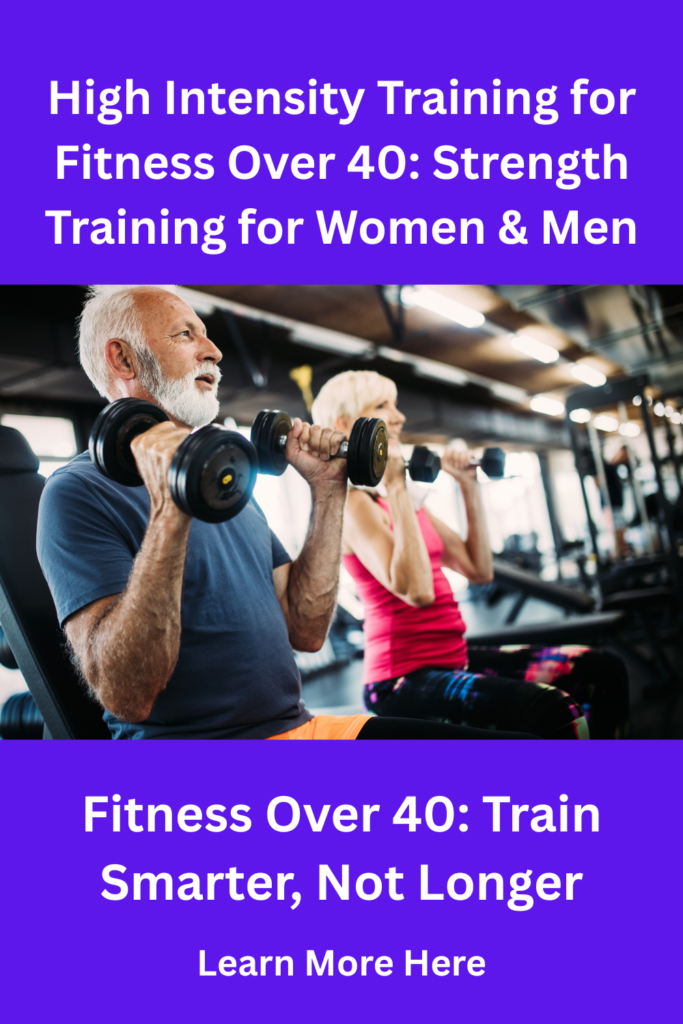
Start conservatively. One or two short sessions per week should be enough initially. Over the following weeks and months, you can gradually increase the duration and the intensity level of your training as your body adapts. The goal is not to prove how hard you can exercise on your first day. The goal is to build your fitness progressively and sustainably.
What Is High Intensity Training?
High Intensity Training is a strength-training approach that emphasizes brief, focused, high-effort workouts.
Rather than performing a large number of sets and spending long periods exercising, HIT focuses on making each working set of each exercise highly productive. Exercises are generally performed with controlled technique and enough effort to bring the target muscles to momentary muscular failure—the point at which you cannot complete another repetition with proper form.
This is one of the defining characteristics of the HIT approach. A workout doesn’t have to be long to be effective. In fact, one of the major advantages of High Intensity Training is that you can accomplish a great deal of productive exercise in a relatively short period.
What Equipment Do You Need for High Intensity Training?
You don’t need an expensive home gym or a room full of specialized equipment to perform effective High Intensity Training. A variety of equipment can be used, including:
- Dumbbells
- Barbells
- Weight-training machines
- Resistance bands
- Bodyweight exercises
The equipment itself is not necessarily the most important factor. How you perform the exercise is often more important than what equipment you use.
Proper technique, appropriate resistance, controlled movement, and sufficient effort determine whether an exercise provides an effective training stimulus. For example, a well-performed bodyweight squat can be highly productive, just as a properly performed machine exercise can be. The important question is whether the exercise effectively challenges the muscles you are trying to train.
How Long Should a High Intensity Workout Be?
One of the most appealing features of High Intensity Training is its efficiency. A productive workout does not need to last an hour or more. Depending on your program, fitness level, and number of exercises, a full-body HIT workout can often be completed in less than 30 minutes.
The exact duration isn’t the most important consideration. What matters is the quality and intensity of the work you perform. A high-intensity workout should be relatively brief but demanding. Working sets are performed with enough effort to bring the muscles to momentary failure while maintaining proper technique.
Once you have reached that point, continuing to perform additional repetitions with poor form isn’t productive. Because these workouts place a significant training demand on your muscles, adequate recovery is essential. Many people benefit from allowing at least several days between challenging full-body HIT sessions.
What Are the Benefits of High Intensity Training?
When properly designed and combined with good nutrition and recovery, strength training can provide a wide range of benefits.
Potential benefits include:
- Increased muscular strength
- Muscle growth and preservation of lean muscle
- Improved body composition
- Support for healthy metabolism
- Improved cardiovascular and cardiorespiratory fitness
- Better blood-sugar management
- Improved mobility and physical function
- Support for bone health
- Greater physical independence
- Improved confidence and self-esteem
- Support for cognitive and brain health
- Improved overall quality of life
These benefits don’t come from simply exercising at high intensity. They result from providing your body with an appropriate training stimulus and then giving it the nutrition, rest, and recovery it needs to adapt.
What Does a High Intensity Training Workout Look Like?
A basic full-body HIT workout typically includes exercises that target the major muscle groups. For example, a workout might include:
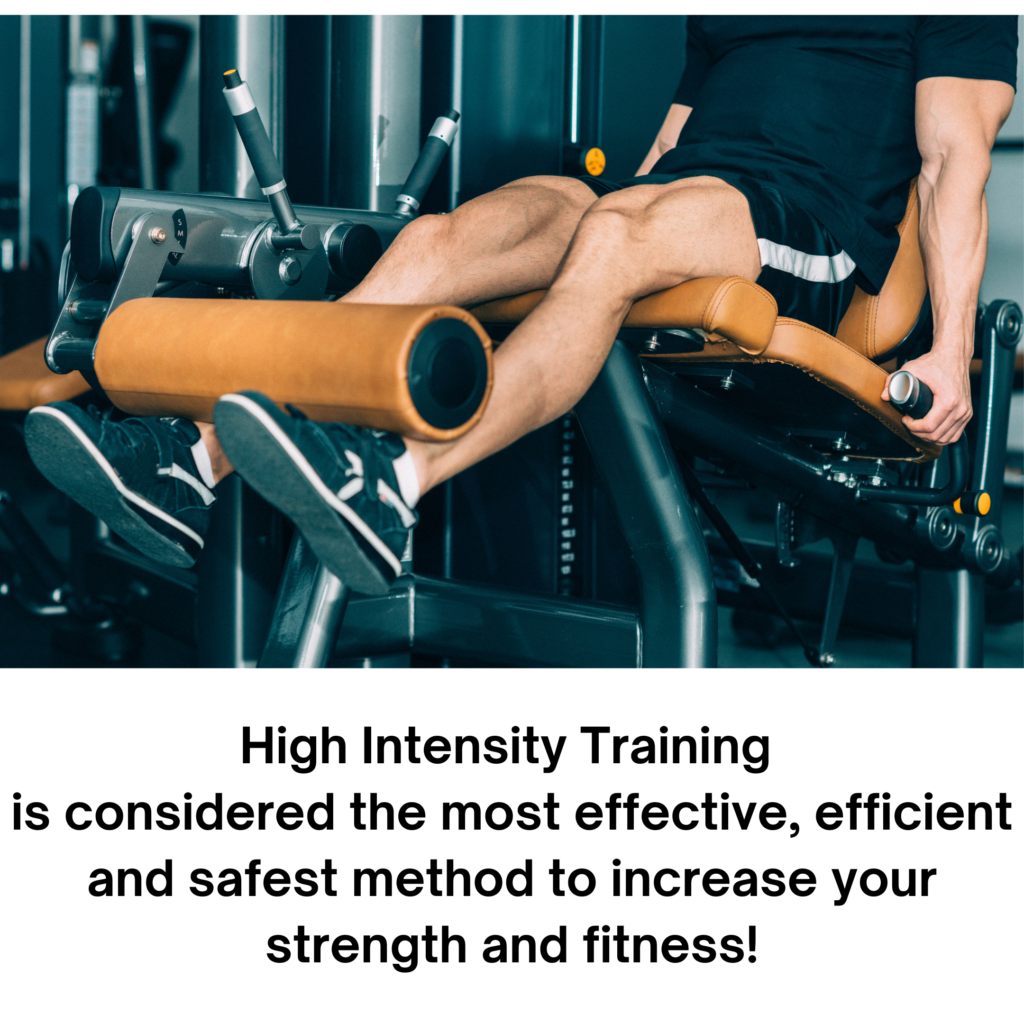
- Leg press
- Leg extension
- Leg curl
- Calf raise
- Lat pulldown
- Chest press
- Lateral raise
- Barbell or dumbbell curl
- Triceps pushdown
- Weighted abdominal exercise
This is simply an example. You don’t necessarily need all ten exercises, and the ideal exercise selection will vary depending on your goals, equipment, fitness level, and individual circumstances. The basic principle is to select exercises that efficiently train the major muscle groups and perform them with sufficient effort and good technique.
For an experienced trainee, a full-body HIT workout performed approximately twice per week can be an effective approach to developing overall strength and fitness. If you’re new to this style of training, however, you may need less volume and intensity while you become accustomed to the demands of the workouts.
How Many Repetitions Should You Perform?
There is no magic number of repetitions that works for everyone. A common guideline for many resistance exercises is approximately 8–12 repetitions, but the appropriate number can vary depending on the exercise, resistance, individual ability, and training objective.
The important point is that your muscles cannot count repetitions. If you reach 10 repetitions and could easily perform five more, you haven’t necessarily provided the same stimulus as someone who reaches momentary failure at 10 repetitions.
Rather than becoming obsessed with a specific number, focus on performing each repetition correctly and challenging the target muscles appropriately.
Some HIT programs also use time under tension or time under load as a way of monitoring the duration of a working set. A set might take approximately 60–120 seconds to reach momentary failure, depending on the exercise and the individual’s capabilities.
These are guidelines—not rigid rules. Good technique and productive muscular effort are more important than hitting an arbitrary number.
Maintain Proper Exercise Form
Proper form is one of the most important components of High Intensity Training.
When an exercise becomes difficult, there is a natural tendency to speed up, jerk the weight, or use other body movements to help complete the repetition. Resist that temptation. Instead, use controlled movements throughout the entire range of motion. A useful starting point is to take approximately 2–3 seconds to lift the resistance and 4–6 seconds to lower it. Some people may find an even slower tempo, such as five seconds up and five seconds down, effective.
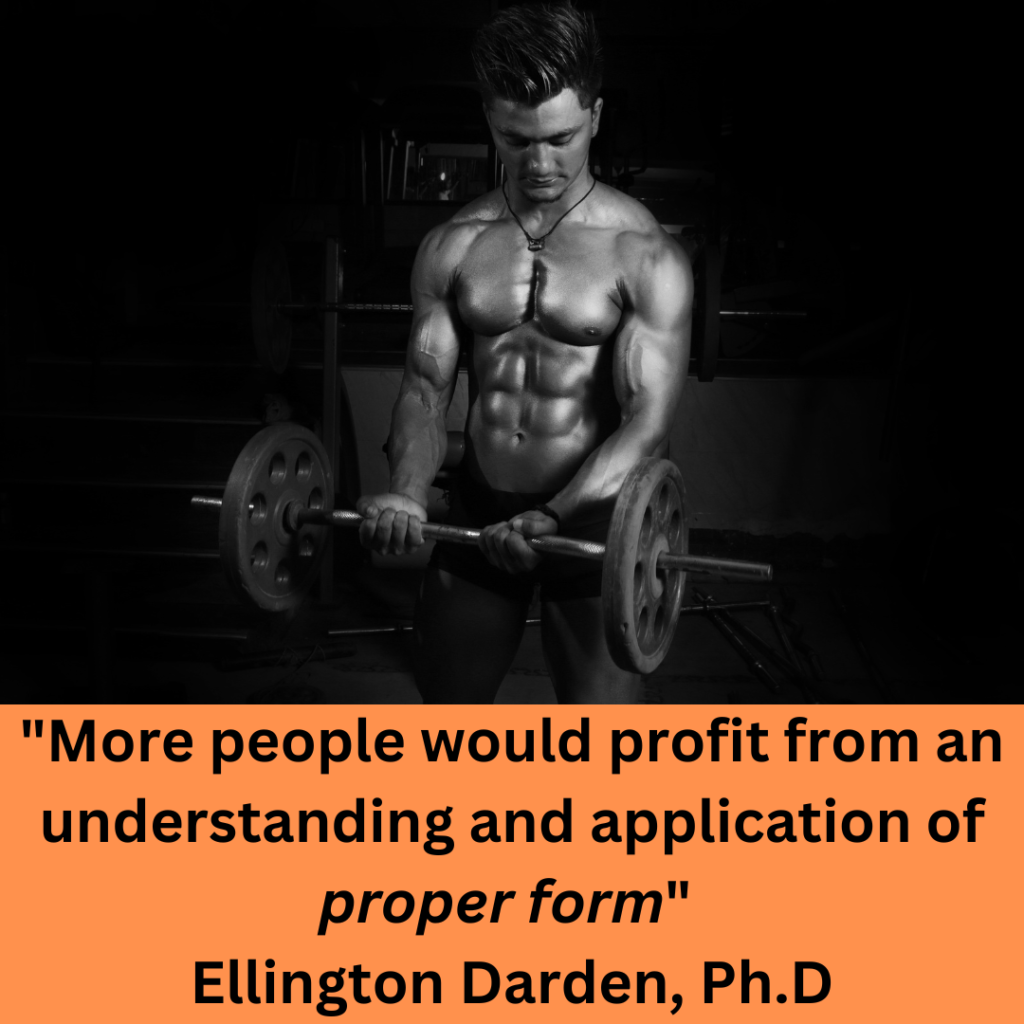
The exact tempo isn’t as important as maintaining smooth, controlled movement. Avoid allowing the resistance to simply drop during the lowering portion. The eccentric or lowering phase of an exercise can provide a significant training stimulus, and controlling it keeps the target muscles working. Using momentum may allow you to move more weight or perform additional repetitions, but it can also reduce the amount of work being performed by the muscles you’re trying to train. Make the muscles do the work—not momentum.
How Do You Progress With High Intensity Training?
Progressive overload is an important part of effective strength training. As your muscles become stronger, you should gradually increase the training demand. One simple approach is to use a repetition range. For example, if you’re working within an 8–12 repetition range, you might increase the resistance slightly once you can perform 12 repetitions with excellent form.
Another approach is to monitor the amount of time you can maintain muscular tension before reaching momentary failure.
Regardless of the method you use, progression should be gradual. Never sacrifice proper technique simply to lift more weight. Performing an exercise correctly with a slightly lighter resistance is far more productive than using excessive weight and relying on momentum or poor form.
What Should You Eat After a High Intensity Workout?
You don’t need an expensive supplement regimen to support your recovery. Good nutrition starts with a balanced diet that provides sufficient protein, carbohydrates, healthy fats, vitamins, minerals, and calories appropriate for your individual needs.
After a demanding workout, staying hydrated is important. Water is usually sufficient for hydration during and after ordinary strength-training sessions. A protein-rich meal or snack after training can also provide the amino acids your body needs for muscle repair and adaptation. Good food choices include:
- Eggs
- Lean poultry
- Fish
- Lean meats
- Beans and other legumes
- Greek yogurt or other dairy foods
Including a source of carbohydrate can also be appropriate, particularly if you are active and need to replenish energy. Fruits such as apples or bananas are simple options.
You don’t need to become obsessed with a narrow “post-workout window.” What matters much more is your overall daily nutrition and adequate protein intake.
Rest and Recovery Are Part of the Workout
One of the most important concepts in High Intensity Training is that the workout itself is only the stimulus. The actual adaptation takes place afterward. When you perform a challenging strength workout, you place stress on your muscles and other systems of the body. During recovery, your body repairs and adapts to that stress. This is how you become stronger.
If you continually train hard without giving yourself sufficient recovery time, you may interfere with that adaptation process and find that your progress eventually stalls. For this reason, I generally recommend allowing at least three days of recovery between demanding full-body HIT workouts, particularly when you are training close to momentary muscle failure.
More advanced trainees or people performing particularly demanding workouts may require additional recovery. Your recovery needs can also change as you get older, as your fitness level improves, or as your training intensity increases.
Don’t Underestimate Sleep and Hydration
Nutrition isn’t the only component of recovery. Adequate sleep gives your body time to repair and adapt, while proper hydration supports normal physical function and recovery. Dehydration can contribute to symptoms such as fatigue, dizziness, nausea, and reduced exercise performance.
Recovery isn’t wasted time. Recovery is when your body turns the training stimulus into an adaptation.
Is High Intensity Training Right for You?
High Intensity Training isn’t the only effective way to exercise, and it isn’t necessarily appropriate for everyone. Some people prefer lower-intensity or higher-volume training. Others thrive on brief, demanding workouts.
The best exercise program is one that is appropriate for your current fitness level, fits your lifestyle, and allows you to train consistently. If you’re healthy, have some experience with exercise, and enjoy challenging yourself, HIT may be an excellent option.
If you’re currently sedentary, start gradually. You don’t have to begin with an extremely intense workout. Build a foundation of fitness first, then progressively increase the demands placed on your body.
And remember that high intensity doesn’t mean reckless intensity. The objective isn’t to make every workout as brutal as possible. It’s to provide an effective stimulus, recover from it, and gradually become stronger and fitter.
Start Where You Are and Build From There
You don’t need to be in excellent shape before you begin strength training. You simply need to start at a level appropriate for you.
As your fitness improves, you can gradually increase resistance, intensity, and training demands. With patience and consistency, those small improvements can add up to significant changes in strength, body composition, and physical capability. High Intensity Training can be remarkably efficient, but its effectiveness ultimately depends on how you apply it.
Use appropriate exercises.
Train with purpose.
Maintain strict form.
Challenge your muscles.
Allow adequate recovery.
And give your body the nutrition it needs to adapt.
Train hard—but train intelligently. That is what makes High Intensity Training more than just a difficult workout. It is a systematic approach to becoming stronger, fitter, and more capable.
About the Author
David Waters is a fitness professional with more than 40 years of experience in the fitness field. He holds a Bachelor of Science degree in Physical Education from the University of Massachusetts Amherst and has worked as a personal trainer, fitness director, fitness facility manager, competitive athlete, author, and fitness educator.
He is the author of The Science and Practice of High Intensity Training, available from SuperFitnessForever.com.
The information provided on SuperFitnessForever.com is intended for general educational and informational purposes only. It is not intended to diagnose, treat, or prevent any medical condition, nor does it constitute medical or professional advice.
The information on this website does not prescribe an exercise program for any individual. Exercise involves inherent risks, and results can vary from person to person. SuperFitnessForever.com and David Waters are not responsible for any injury, loss, or damage that may result from the use of information provided on this website or participation in any exercise program.
Consult your physician or other qualified healthcare professional before beginning a new exercise program, particularly if you have a medical condition, injury, or concerns about your ability to exercise safely.
Affiliate Disclosure Some links on this website are affiliate links. This means I may earn a small commission if you purchase a product through one of these links, at no additional cost to you. I only recommend products, books, and services that I believe may be useful to my readers. Thank you for supporting my website.